
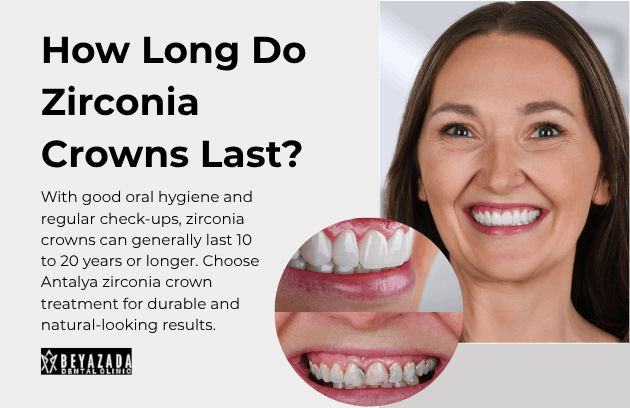
Zirconia is one of the frequently preferred crowns in modern dentistry thanks to its durability and natural appearance. Knowing how long zirconia crowns can be used is important when planning treatment. This information facilitates the selection of the correct treatment and helps patients define their expectations more realistically.
Zirconia crowns last longer than most patients think. A well-made zirconia crown, with proper care and regular check-ups, can generally last 10–20 years, or even longer in some cases. However, honestly, this duration doesn’t depend solely on the material. The quality of the crown, the dentist’s planning, teeth-grinding habits, and oral hygiene—all directly affect this lifespan.
Clinical studies support this: some research shows a success rate of over 90% after 10 years, and long-term studies show strong performance for around 15 years. Especially new generation monolithic zirconia crowns, because they are produced in a single piece, further reduce the risk of fracture and cracking.
Our Beyazada Dental Clinic observation is this: a well-planned zirconia crown, with proper care, will work flawlessly for years, just like a quality watch. But if neglected… even the most durable material can cause problems over time. That’s exactly the point.
In short: Zirconia crowns are long-lasting — but their true durability is determined by your care habits.
What is a zirconia crown?
A zirconia crown is a type of dental prosthesis made from an extremely strong ceramic material called zirconium dioxide, used to restore damaged or decayed teeth. In dentistry, it is also referred to as ‘ceramic steel’ due to its high strength and fracture resistance. Today, zirconia crowns in Turkey have become one of the most preferred restorative treatments due to their durability, aesthetics, and long-term performance.
The key features of zirconia crowns are as follows:
- Superior durability: Zirconia is a very strong material that is resistant to fracture. This makes it highly suitable for the back molars, where chewing pressure is at its highest.
- Natural aesthetics: It can mimic the colour of natural teeth. Although not as translucent as E-max veneers, it is typically used with an added porcelain layer to achieve a better appearance.
- Biocompatibility: It is highly compatible with body tissues, causes minimal irritation to surrounding tissues, and carries a very low risk of allergic reactions.
- Minimal tooth preparation: Requires the removal of less tooth structure, thereby preserving more of the natural tooth structure.
- Durable: Can last 10–20 years or longer with excellent oral hygiene.
Technological production: Is usually produced with precision using CAD/CAM (computer-aided design and manufacturing) technology.
Main applications of zirconia crowns
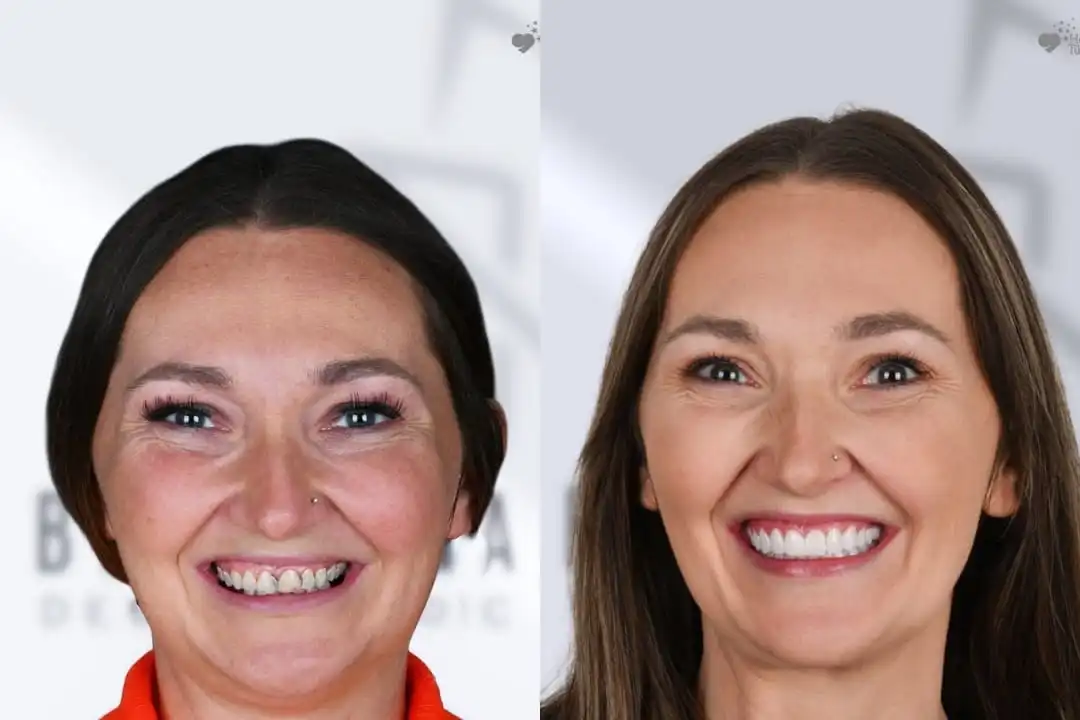
At Beyazada Dental Clinic, we particularly recommend zirconia crown treatment to our patients in the following cases:
- Posterior molars: The key feature of zirconia is that it is extremely strong and resistant to fracture. For this reason, it is one of the first choices for crowning molars in the posterior region, where chewing pressure is highest.
- Replacement of missing teeth (bridges): When one or more teeth are missing, zirconium is widely used in ‘bridge’ prostheses, which are supported by adjacent teeth. It is a reliable choice, particularly for bridges spanning long gaps, as it provides a framework as strong as metal.
- Implant abutments: The components attached to the implant to hold the crown in place can be made of zirconium. This prevents metal from showing at the gum line, resulting in a more natural and aesthetic appearance.
- Zirconium implants: In some cases, the implant itself (the screw-like part) can be manufactured from zirconium for patients with metal allergies or those with high aesthetic concerns.
- Root-canal-treated and severely damaged teeth: Zirconia crowns are used to protect and strengthen teeth with very large fillings or fractures or those weakened following root canal treatment. Zirconia is also an option for the support posts placed inside teeth that have undergone root canal treatment.
- Support for removable dentures: In patients using partial (removable) dentures, zirconium crowns are used to strengthen the natural teeth to which the denture is attached and to ensure the denture sits more securely.
- Smile design and aesthetics: As zirconium can mimic the colour of natural teeth, it is also used on front teeth. Although it is not as translucent as E-max, very natural results can be achieved by adding a porcelain layer on top.
- Orthodontic treatments: Brackets used in brace treatment can be manufactured from zirconium for patients wishing to avoid a metallic appearance.
Comprehensive dental crown materials comparison
When choosing the right dental crown in Antalya, understanding the differences between materials is essential. Zirconia, E-max, PFM, and gold crowns each offer different benefits depending on clinical needs and aesthetic expectations.
| Feature | Zirconia Crowns | Gold (Metal) Crowns | E-max Crowns | PFM Crowns |
|---|---|---|---|---|
| Material Composition | Zirconium dioxide; a strong polycrystalline ceramic often called “ceramic steel”. | Gold alloy (mixture of gold, platinum, or other metals). | Lithium disilicate glass-ceramic. | Porcelain fused to a strong metal framework. |
| Strength & Durability | Extremely strong and fracture-resistant; handles high chewing forces. | Exceptionally durable; resistant to chipping or cracking. | Strong, but less durable than zirconia or gold; best for low-stress areas. | High strength from metal core; porcelain layer may chip. |
| Aesthetics | Good; natural-looking but less translucent than E-max. | Metallic appearance; not tooth-coloured. | Excellent translucency and highly natural appearance. | Moderate; metal core may affect translucency. |
| Biocompatibility | Very high; low risk of irritation or allergy. | High; well tolerated by most patients. | High; hypoallergenic and gum-friendly. | Possible allergic reactions in metal-sensitive patients. |
| Longevity | 10–20+ years; approx. 88% survival over 5 years. | 20+ years; 96% survival over 10 years. | 10–15 years; approx. 90% survival over 10 years. | 90–97% survival over 10 years. |
| Tooth Preparation | Minimal tooth reduction required. | Least tooth removal required. | Moderate tooth preparation required. | More tooth reduction needed. |
| Cost | Moderate; cost-effective for durability. | Usually the most expensive option. | Moderate pricing. | Moderate to high cost. |
| Opposing Tooth Wear | May cause wear if poorly polished. | Gentle on opposing teeth. | Low wear; similar to natural enamel. | Porcelain may be abrasive. |
| Best Applications | Back teeth and long bridges. | Molars and heavy grinders. | Front teeth and aesthetic cases. | High-stress areas needing strength and aesthetics. |
What is the average lifespan of zirconia crowns in Turkey?
With good oral hygiene and regular check-ups, the lifespan of zirconia crowns in Antalya, Turkey, can generally be 10 to 20 years or longer. Clinical studies show that the 5-year survival rate for single zirconia crowns is approximately 88%.
What factors affect the lifespan of a zirconia crown?
There are numerous biological, technical, and patient-related factors that influence the lifespan of zirconia crowns and the success of the restoration. For zirconia crowns to be long-lasting, correct clinical practice, a meticulous laboratory process, and the patient’s regular oral hygiene must all be combined.
The key factors affecting the lifespan of zirconia crowns are as follows:
Oral hygiene and care
- Plaque control: Although the crown itself does not decay, plaque build-up at the margin—the junction between the crown and the natural tooth—can lead to secondary caries.
- Cleaning habits: In addition to brushing, the use of dental floss, interdental brushes, or a water flosser is critical for extending the lifespan of the restoration.
Patient-related factors and habits
- Bruxism (teeth clenching/grinding): Parafunctional habits increase the risk of cracking or chipping of the porcelain layer on zirconia by approximately three times.
- Masticatory forces: The position of the teeth is important; as the back molars are subjected to higher masticatory pressure, the survival rates of restorations in this area may be lower than those in the front teeth.
- Diet and usage: Unnecessary stress, such as using teeth to open bottle caps or biting very hard objects, should be avoided.
- Biological factors: A high caries index, old age, and the associated reduction in saliva flow rate can negatively affect the lifespan of the restoration.
Technical and clinical factors
- Dentist’s experience: The clinician’s experience, attention to detail during the preparation phase, and appropriate case selection directly influence the success of the restoration.
- Cementation (Bonding): Bonding protocols used to secure the zirconia to the tooth (e.g., primers containing MDP and sandblasting) reduce the risk of the restoration becoming dislodged.
- Manufacturing process: Computer-aided design (CAD/CAM) of the restoration and slow cooling protocols during production prevent stresses and associated cracking in the porcelain superstructure.
Structure of the restoration
- Size and type of restoration: Larger restorations and long-span bridges (5 units or more) carry a higher risk of technical failure compared to shorter ones.
- Veneer (porcelain overlay): Although the zirconia framework is very strong, fracture of the porcelain layer added for aesthetic purposes is one of the most common technical issues. This can be caused by manufacturing defects or excessive chewing forces.
Conclusion
Dental crowns are a long-term investment in oral health and, with proper care, can typically last for over 15–20 years, depending on the materials used and your lifestyle.
If you are considering having a dental crown fitted or if your teeth require restoration, Beyazada Dental Clinic in Antalya offers specialist care tailored to your needs and long-lasting solutions. We treat hundreds of patients with crowns every year at our clinic. By choosing to have your dental crowns fitted in Antalya, you can receive high-quality and safe dental treatment. Contact us today.
FAQs
Is it normal to experience pain after having a zirconia crown fitted?
Mild sensitivity for a few days after the crown is fitted is normal. However, if you experience prolonged pain, sensitivity to hot or cold, or swelling of the gums, there may be a cavity or a nerve problem in the underlying tooth. Early intervention is important for the longevity of the crown.
I have a habit of clenching my teeth; will a zirconia crown break easily?
Zirconia is extremely durable; however, teeth clenching and grinding can lead to wear on the crown, damage to the underlying natural tooth, or cracking of the crown. In such cases, the use of a night guard (occlusal splint) will extend its lifespan.
Do zirconia crowns change colour over time?
Zirconia itself does not change colour. However, the porcelain layer on top (if it is not a full-contour zirconia crown) may become dull after many years, or a colour difference may develop at the edge of the crown due to gum recession. The best aesthetic results are achieved with full-contour zirconia.
Can decay form under a zirconia crown?
Yes, it can. If proper cleaning is not carried out at the junction between the crown and the gum, and if there is marginal leakage, decay may develop in the natural tooth beneath the crown over time. This situation requires the crown to be replaced.
Does smoking affect the lifespan of a zirconia crown?
Although smoking does not directly damage zirconia, it compromises gum health, leading to gum recession and bone loss. This, in turn, causes the edge of the crown to become exposed and results in a loss of aesthetics, thereby shortening its lifespan.
Does the lifespan of zirconia crowns change if they are placed on implants?
Zirconia crowns placed on implants have a similar lifespan (10–20 years). However, the implant itself can last for many years depending on oral hygiene. The critical factor here is the health of the tissues surrounding the implant.