
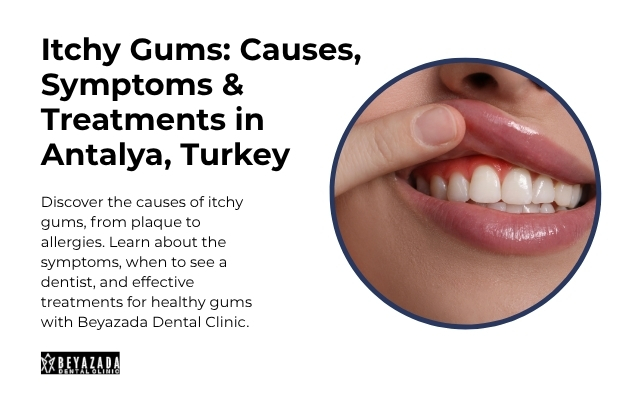
“Itchy gums” refer to a sensation of irritation, discomfort, or itching felt in the gum tissue.
Causes of itchy gums
Although itchy gums (gingival pruritus) may seem like a simple nuisance, they are actually an important signal from your body that something is amiss with your oral health. This condition can stem from a wide range of causes, ranging from mild irritation to serious gum diseases or systemic health issues.
Common causes of itchy gums:
Plaque build-up and gum diseases
The most common cause of itchy gums is bacterial plaque that accumulates on the teeth as a result of poor oral hygiene.
Plaque and tartar
Bacteria combine with food debris and saliva to form a sticky film (plaque) along the gum line. If this plaque is not removed, it hardens and turns into tartar. Toxins secreted by the bacteria irritate the gums, causing itching and inflammation.
Gingivitis
In this early stage of gum disease, the gums become red, swollen, and often itchy. This stage is usually painless, so itching is an important early warning sign.
Periodontitis
If gingivitis is left untreated, it progresses to periodontitis, which damages the bone tissue beneath the gums; this condition can lead to tooth loss.
Allergic reactions and sensitivities
Almost anything that enters your mouth can trigger an allergy, and this usually manifests as itching.
Product allergies
Ingredients in a new toothpaste, mouthwash, or dental floss (such as sweeteners or preservatives) may irritate the gums.
Food allergies and oral allergy syndrome
Foods associated with raw fruit, nuts, or pollen, in particular, can cause intense itching of the gums and palate. Itching of the palate is often a typical sign of an allergy.
Dental materials
Latex gloves used in dentistry and metal fillings (amalgam) or metals in dentures can cause contact reactions and itching.
Hormonal changes
Fluctuations in hormone levels, particularly in women, alter the blood flow to the gums, making the tissues more sensitive.
Puberty, menstruation, pregnancy, and menopause: During these periods, increased levels of oestrogen and progesterone can intensify the gums’ reaction to plaque, leading to itching, swelling, and bleeding. This is particularly common during pregnancy.
Xerostomia
When insufficient saliva is produced, the gums lose their moisture and become prone to irritation.
Side effects of medication
Over 400 medications, including antidepressants, antihistamines, and blood pressure medications, can cause dry mouth.
Medical conditions
Conditions such as diabetes and Sjögren’s syndrome can lead to chronic dry mouth and, consequently, itching.
Lifestyle and habits
Smoking and vaping (e-cigarettes)
Tobacco products and the chemicals in the vapour directly irritate the gums. Furthermore, tobacco disrupts blood flow to the gums, delaying healing.
Bruxism (teeth grinding)
Clamping or grinding your teeth can apply pressure to the tissues holding the teeth in place, causing itching and pain in the gums.
Gum injuries
Injuries caused by vigorous brushing, sports accidents, or ill-fitting dentures may itch while healing.
Rarer and clinical causes
Pulp necrosis
The death of the nerve tissue inside the tooth or failed root canal treatments can sometimes present as persistent itching of the gums without any signs of pain.
Sinusitis
Inflammation of the sinuses leads to increased mucus production, which can accelerate plaque formation along the gum line and trigger itching.
Infections
Oral fungal infections (thrush/candidiasis) or viral infections such as herpes can cause itchy lesions.
Itchy gums: When should you see a dentist immediately?
While itching gums may seem like a minor nuisance at first, there are some indications that point to the severity of the condition and the need for expert attention. Reasons to visit a dentist at the earliest:
Persistence of symptom (rule of 3 days)
If you are experiencing itching and discomfort in your gums that lasts for more than 3 days and you do not get relief from home remedies (such as salt water gargles), you should consult a dentist. If symptoms persist, it could suggest a problem that won’t resolve itself (such as early-stage gum disease).
Gum disease symptoms
If you experience one or more of the following symptoms along with the itching, you are at high risk of the condition developing into periodontal (gum) disease:
Bleeding
Bleeding gums during brushing or flossing.
Redness, swelling
The gums are brightening, reddening, or turning more purple than their typical colour (coral pink) and swelling up.
Gum recession
The gums are starting to recede from the teeth, giving the teeth a longer appearance than they really have.
Loose teeth
Permanent teeth getting loose or the spacing between them increasing.
Signs of infection, abscess
Serious problems might result from untreated infections of the mouth or abscesses. You should make an urgent appointment in the following situations:
Severe pain
For example, throbbing pain in the teeth or gums that is sensitive to touch.
Pus discharge
A build-up of pus oozing from the gum line or between the teeth.
Chronic bad breath
A foul odour or unpleasant taste in the mouth that persists despite good oral hygiene.
Itching around treated teeth
If there is chronic itching in the gum tissue surrounding a tooth that has undergone root canal treatment, the symptom may be an early sign of pulp necrosis or a failed root canal treatment. In such cases, pain is rarely felt; the only warning sign is itching.
Serious allergic responses and systemic disorders
Allergy sensitivities can be life-threatening at times:
Oral allergy syndrome
Swelling and severe itching of the mouth, face, tongue, or throat after eating particular foods.
Anaphylaxis risk
If you have swallowing difficulties, speech impairment, a change in your heart rate, or a sense of faintness following a dental examination or medicine, you must go immediately to the local hospital.
What do you do about itchy gums?
The treatment for itching gums may depend on the source of the condition and may involve both professional dental procedures and practical alternatives you can use at home. The following approaches are used during the therapy phase to relieve itching and repair healthy gum tissue:
Dental care by a professional
The need for professional assistance arises when the cause of itching is usually associated with difficulties of oral hygiene or clinical disorders:
Scaling and root planing
The most prevalent cause of itchy gums is plaque and tartar build-up. Scaling and root planing are performed by the dentist to remove tartar buildup above and below the gum line. In some circumstances laser technology can also be employed to help this procedure.
Medicine and antiseptics
If there is an infection or severe gingivitis, then antiseptic mouthwashes containing chlorhexidine or hexetidine may be recommended. Other treatments include local antibiotics placed into the gum pocket (Arestin and Atridox) or low-dose systemic medicines that suppress collagen breakdown (Periostat).
Retreatment of root canal
Persistent itching of the gums can often be an early indicator of pulp necrosis or a botched root canal therapy. Usually, itching will totally resolve within a few days of the endodontic therapy or repeat treatment.
Allergy management
If the itching is caused by an allergic reaction, your dentist may recommend antihistamines to stop the symptoms and may ask you to change the toothpaste or mouthwash that is causing the irritation.
Soothing methods you can try at home
The following methods are highly effective for relieving mild itching and soothing the gums:
Saltwater gargle
Gargling 3–5 times a day with a mixture made by adding a teaspoon of salt to a glass of warm water can help reduce irritation and inflammation in the gums.
Ice cubes and cold application
Sucking on an ice cube or drinking cold water can numb the gums, relieving the itching sensation and mild swelling. Additionally, chilled chamomile tea bags can provide a soothing effect.
Proper oral hygiene habits
Brushing your teeth at least twice a day with a soft-bristled brush at a 45-degree angle and using dental floss daily are the most fundamental parts of treatment. Triple-headed toothbrushes may provide more effective results in plaque removal.
Lifestyle changes and preventive measures
The following steps should be taken to prevent the recurrence of itching and ensure a long-term solution:
Quitting tobacco products
Smoking, chewing tobacco, and vaping (e-cigarettes) directly irritate the gums and impair blood flow, thereby slowing down healing. Quitting these habits is critical for gum health.
Diet and hydration
Reducing consumption of sugary, acidic, and starchy foods slows down plaque formation. Keeping the mouth moist by drinking plenty of water prevents itching caused by dry mouth.
Probiotics
It has been scientifically demonstrated that oral probiotics containing Lactobacillus reuteri reduce gum inflammation and plaque.
Night guard
If the itching is caused by teeth grinding (bruxism), a night guard obtained from your dentist will reduce pressure and irritation on the gums
FAQs
My gums are itchy during pregnancy; what is the cause?
Pregnancy hormones increase blood flow to the gums and make the tissues more sensitive. This condition is known as ‘pregnancy gingivitis’ and can cause itching.
The itching started after I started using a new toothpaste; what should I do?
Stop using the toothpaste immediately. The sodium lauryl sulphate or flavourings in it may have caused an allergic reaction. Switch to a fluoride-free, natural toothpaste.
My gums itch when I use dental floss; should I stop using it?
No, on the contrary, regular flossing removes plaque. However, if you’re using it too vigorously, you may be irritating your gums. Try to be gentle.
I’m experiencing bleeding along with itching—is this a sign of gum disease?
Yes, it is most likely a symptom of gingivitis or periodontitis. You must see a dentist, as this can lead to tooth loss if left untreated.
My gums are itchy while wearing braces; is this normal?
The friction from the wires or food particles trapped around the brackets can cause irritation. Brush more frequently and inform your dentist.
Can stress cause itchy gums?
Stress can trigger gum inflammation by weakening the immune system. Additionally, teeth grinding or clenching can create a sensation similar to itching in the gums.
Does a fungal infection (thrush) cause itching?
Yes, particularly in people with a weakened immune system, oral candidiasis can cause white patches and itching on the gums. Your doctor may prescribe an antifungal medication.
Is it normal for a child’s gums to itch during teething?
Yes, it is normal. As a baby’s teeth come through, the gums may itch and become red and swollen. Chilled teething rings can help.
Can vitamin deficiency cause itchy gums?
Yes, a deficiency in vitamin C and vitamin B12 in particular can cause sensitivity, itching, and bleeding of the gums.
Is it harmful to scratch itchy gums?
Yes, scratching with your finger or a hard object can lead to sores, infection, and receding gums. Never scratch them.
Could persistent itchy gums be a sign of a serious illness?
It is rarely seen in conditions such as leukaemia, diabetes, or autoimmune diseases. However, your dentist should examine you first and, if necessary, refer you to a GP.
Conclusion
Gum irritation isn’t just a simple itch; it’s often an early sign of an underlying problem. Your body is giving a small “alarm” signal. If you don’t heed it, this silent warning can develop into bigger and more costly problems over time.
Plaque buildup, hormonal fluctuations, or sensitivity around implants… Whatever the cause, the logic is the same: Gum disease doesn’t resolve on its own; it needs to be managed. Think of your gums like the foundation of your house. If the foundation is weak, the superstructure, no matter how strong, is at risk. Regular cleaning, proper care, and professional intervention when needed keep this foundation strong.
Beyazada Dental Clinic in Antalya offers preventive care, advanced treatments, and a patient-centred approach to protect gum health. With a clear plan, accurate diagnosis, and regular follow-up, gum problems can be brought under control.